How Missing Teeth Can Affect Your Overall Health More Than You Think
When most people think about a missing tooth, they think about the gap in their smile. While appearance is certainly a concern, the effects of tooth loss go far beyond cosmetics. Missing teeth can impact the way you eat, speak, and even affect your long-term oral and overall health.
Whether you have lost a tooth due to injury, decay, or gum disease, understanding the consequences of tooth loss can help you make informed decisions about your dental care.
What Happens When You Lose a Tooth?
Your teeth work together as a complete system. When one tooth is missing, the surrounding teeth often begin to shift toward the empty space. Over time, this movement can cause alignment issues, bite problems, and increased wear on your remaining teeth.
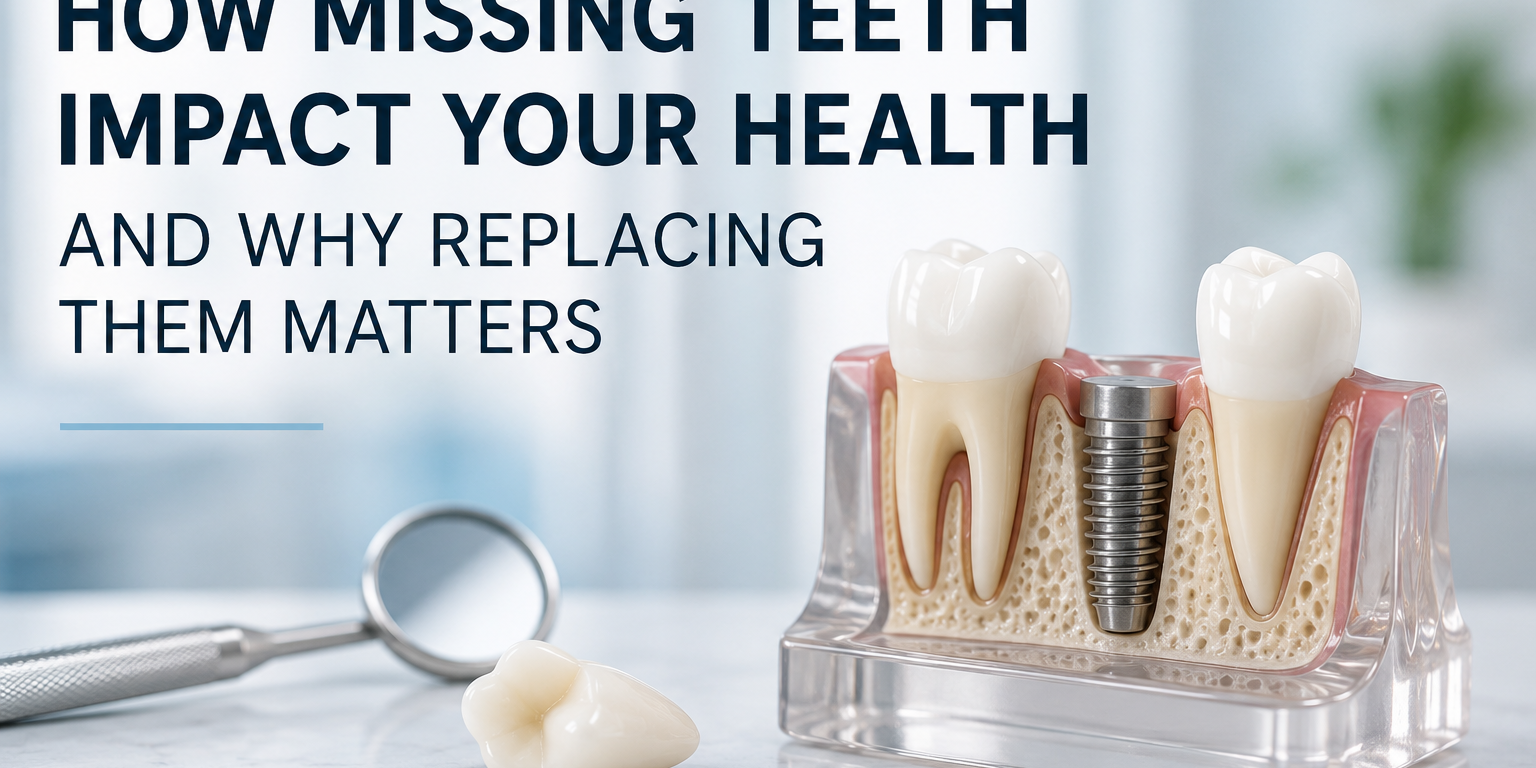
At the same time, the jawbone beneath the missing tooth no longer receives stimulation from chewing. Without that stimulation, the bone can begin to shrink, a process known as bone resorption. This can change the shape of your face and make future tooth replacement more challenging.
Missing Teeth Can Affect the Way You Eat
One of the most immediate effects of tooth loss is difficulty chewing certain foods. Many people begin avoiding healthy options such as apples, nuts, vegetables, and lean meats because they become harder to eat comfortably.
Unfortunately, limiting these foods can reduce the variety of nutrients in your diet. Over time, this may impact your overall health and make it more difficult to maintain proper nutrition.
Speech and Confidence May Be Affected
Your teeth play an important role in how you form certain sounds and words. Missing teeth, particularly those in the front of the mouth, can affect speech clarity and pronunciation.
Many people also experience a loss of confidence after losing a tooth. They may become self-conscious when smiling, speaking, or taking photos. This can affect personal relationships, social interactions, and even professional opportunities.
The Hidden Risks of Leaving Missing Teeth Untreated
A missing tooth can create additional stress on the surrounding teeth, increasing the risk of fractures, uneven wear, and future tooth loss. Spaces created by missing teeth can also trap food particles and bacteria, increasing the likelihood of gum disease and decay.
The longer a missing tooth remains untreated, the greater the chance of developing more complex dental problems that may require extensive treatment.
Options for Replacing Missing Teeth
The good news is that modern dentistry offers several effective solutions for replacing missing teeth.
Dental Implants
Dental implants are often considered the gold standard for tooth replacement. They replace both the tooth root and the visible tooth, helping preserve jawbone health while providing a natural look and feel.
Dental Bridges
A bridge fills the gap left by a missing tooth by using neighboring teeth for support. Bridges can restore function and appearance while preventing teeth from shifting.
Dentures
Partial and full dentures remain reliable options for patients missing multiple teeth. Today’s dentures are more comfortable and natural-looking than ever before.
Don’t Wait to Replace Missing Teeth
If you have one or more missing teeth, seeking treatment sooner rather than later can help prevent additional oral health concerns. Early intervention often leads to simpler treatment options and better long-term outcomes.
At Downingtown Family Dental Center, we offer personalized solutions to restore your smile, improve your oral health, and help you feel confident again. If you are living with missing teeth, our team is here to help you explore the treatment option that best fits your needs and goals.